

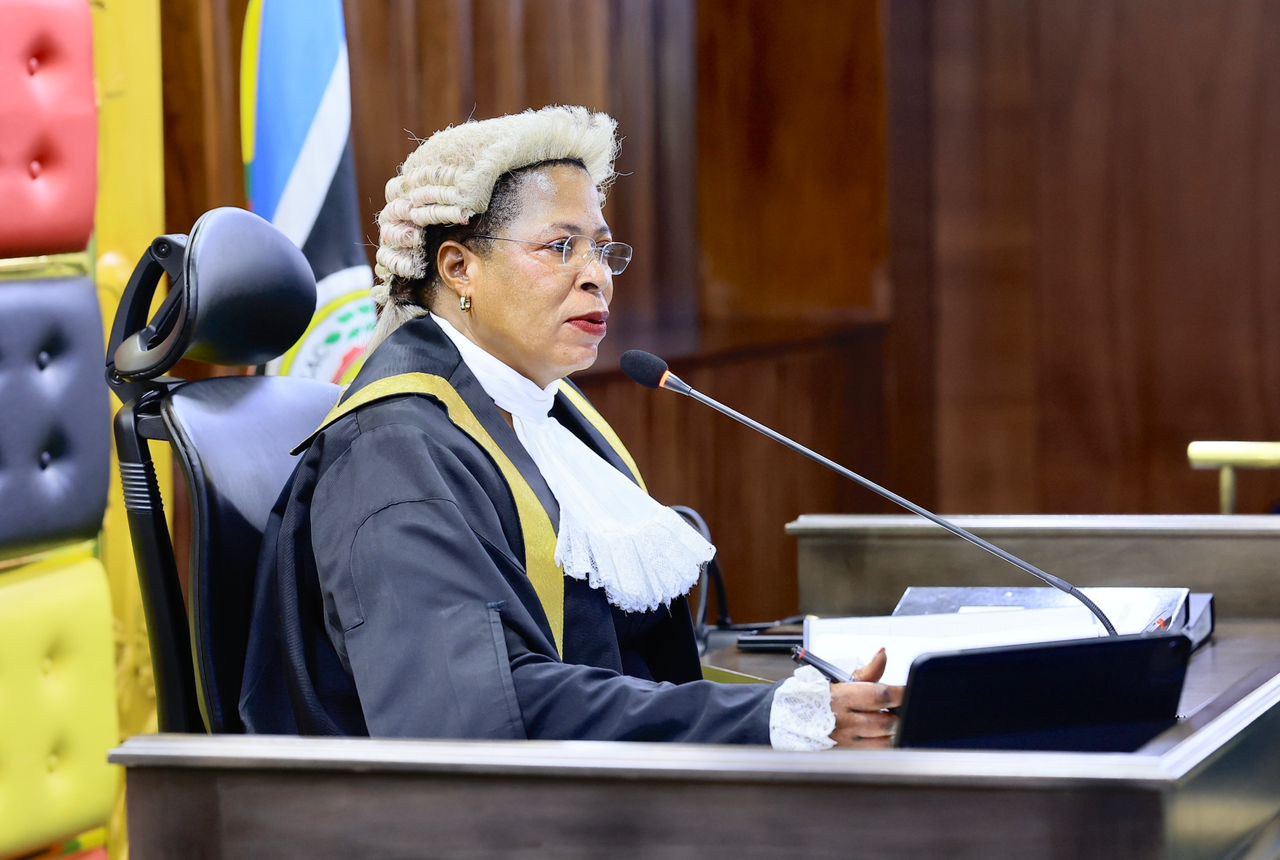
Parliament is set for a tense and high-stakes sitting next Tuesday as lawmakers return to consider the second and third readings of the Protection of Sovereignty Bill, 2026.
The Clerk to Parliament, Adolf Mwesige Kasaija, has issued a formal notice recalling Members of Parliament for a plenary session on May 5 at 2:00 PM, following the House’s earlier adjournment sine die by the Speaker.
At the centre of the session is Item 12 on the Order Paper—the controversial Sovereignty Bill—now entering its final legislative stages amid growing national debate.
The bill, spearheaded by the Ministry of Internal Affairs, is being fast-tracked despite strong warnings from economic managers about its potential impact on Uganda’s financial stability.
Earlier, State Minister for Internal Affairs David Muhoozi and Attorney General Kiryowa Kiwanuka held a strategic meeting with the Speaker to coordinate its progression through Parliament.
However, the push has drawn sharp criticism from the Bank of Uganda, whose Governor, Michael Atingi-Ego, warned lawmakers that passing the bill in its current form could trigger severe economic consequences.
Appearing before the Joint Committee on Legal and Defence Affairs, Atingi-Ego cautioned that the bill introduces “voluntary shocks” that could reverse decades of financial sector gains.
He raised particular concern over provisions requiring ministerial approval for cross-border financial transactions, arguing that they create a parallel reporting system that undermines banking secrecy and the independence of the Central Bank.
The Governor warned that the immediate impact could include a withdrawal of offshore investors, who currently hold an estimated $3 billion in government securities.
Such an exit, he said, would likely weaken the Ugandan shilling, drive up import costs, and strain the country’s economic stability.
“A country without reserves is not sovereign,” Atingi-Ego told legislators, warning that Uganda’s $6 billion in foreign reserves and $1.5 billion balance of payments surplus could be eroded.
Beyond short-term market shocks, he highlighted broader structural risks, noting that Uganda requires approximately $50 billion in foreign capital annually to meet its long-term growth targets.
He cautioned that restrictive financial controls and policy uncertainty could push transactions into informal channels, potentially exposing the country to international scrutiny, including a return to global financial monitoring “grey lists” and the loss of correspondent banking relationships.
Despite the concerns, proponents of the bill argue that tighter oversight of foreign influence is necessary to safeguard national sovereignty and protect Uganda’s political and economic interests.
With both sides holding firm, Tuesday’s debate is expected to be closely watched as lawmakers weigh national security considerations against economic stability.
All eyes will be on Parliament as the government moves to finalise one of the most contentious pieces of legislation in recent years.
